
Rebuilding email as a brand channel, not a broadcast tool
Case study:· Email Strategy & Design System
A strategic audit, eye-tracking study, and modular design system — built to make Boots as powerful in the inbox as on the high street.
Boots UK Scope |. Email Strategy & Design System Platform. |. Cheetah Digital
How a data-led creative audit, eye-tracking analysis, and a modular template system transformed one of Britain's most iconic health and beauty brands in the inbox.
The challenge
A platform migration hiding a deeper brand problem
Boots was onboarding to the Cheetah Digital platform and treating it as a technical migration. We saw it differently — as an opportunity to fundamentally reassess how one of the UK's most trusted health and beauty brands was showing up in the inbox.
The emails were functional. Heavily promotional. Template-driven in the worst sense — layouts built around volume and speed, not brand experience or conversion quality.
With 17 million Advantage Card holders — one of the most engaged loyalty audiences in UK retail — the inbox was underperforming as a brand touchpoint at precisely the moment it mattered most.
Boots's emails were optimised for sending volume, not brand experience. The platform migration was the trigger but the real brief was deeper."
The stated brief
Study emails and improve performance on new platform
The real brief
Rebuild the inbox as a brand experience — strategic, measurable, scalable
A four-stage diagnostic and design framework
Strategic Approach
Rather than jumping straight to design, we built a structured process that connected data to decisions — ensuring every creative recommendation was grounded in evidence, not assumption.
Stage 01
Audit
Data-led analysis of the existing email programme across design, brand, and performance dimensions.
-
Eye-tracking simulation and heatmap analysis
-
Creative critique against brand standards
-
Engagement metric benchmarking
-
Mobile rendering assessment
-
Competitor inbox analysis
Stage 02
Diagnose
Translating audit findings into a prioritised list of design and strategic problems, mapped to business impact.
-
Visual hierarchy breakdown
-
CTA clarity & placement issues
-
Brand consistency failures
-
Attention fragmentation mapping
-
Content-to-conversion gap analysis
Stage 03
Direct
A clear creative direction — design principles, brand application rules, and best practice guidelines for the Boots inbox.
-
Brand-first design principles
-
Hierarchy and layout rules
-
CTA framework and placement
-
Typography and colour system
-
Responsive design standard
Stage 04
Scale
A modular template system and internal training programme — giving the Boots team the tools to produce on-brand email at scale.
-
6 modular template components
-
Internal team training and handover
-
Asset and component library
-
Production SLA guidelines
-
Performance testing framework
What the data revealed
The Creative Audit
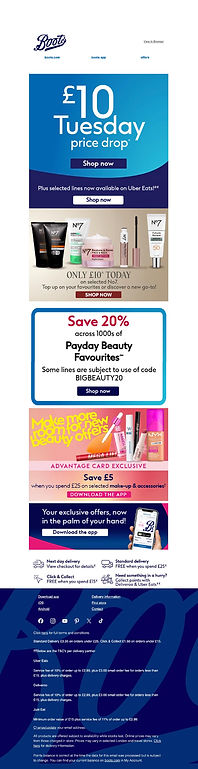
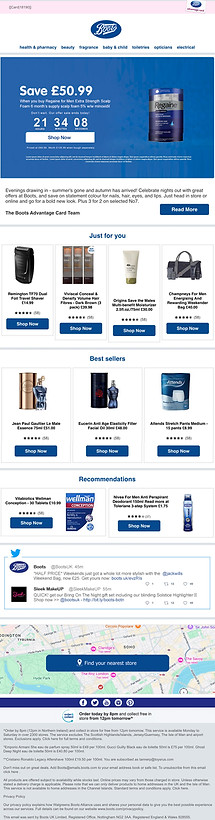
Eye-tracking analysis and creative critique exposed a consistent pattern: cluttered layouts fighting for attention, unclear hierarchy, and a brand that didn't come through at the moments that mattered most
Before:
Attention fragmented across competing elements, CTA buried, brand warmth absent"


After:
Single focal point, brand-led hierarchy, modular and mobile-first"




Findings drawn from eye-tracking analysis, creative critique sessions, and best practice benchmarking were conducted as part of the strategic audit.
The Outcomes - A system the team could Own
The Creative Audit
The goal was never a one-off redesign. It was to leave the Boots internal team with the strategic framework, design tools, and confidence to produce consistently excellent email without external dependency.
6 modular template components — A complete reusable library covering hero, product grid, promotional banner, single CTA, loyalty, and footer modules.
Reduced revision cycles — Clear design principles and a structured briefing process significantly improved first-pass approval rates across campaigns.
Repeatable audit framework — The diagnostic process developed for Boots became a model applied across subsequent client on-boardings.
Involvement:
Creative Direction · Strategic Audit · Eye-Tracking Analysis · Art Direction · Best Practice Training · Design Systems · Client Stakeholder Management